Showing posts with label Patek Philippe. Show all posts

Sunday, November 4, 2012

What does a Patek Minute Repeater sound like?

The time being chimed is 11:58

Eleven Ds, Three F# D, and Thirteen F#

DDDDDDDDDDD F#D F#D F#D F#F#F#F#F#F#F#F#F#F#F#F#F#


A Photographic History of Patek Philippe Perpetual Calendar Chronographs


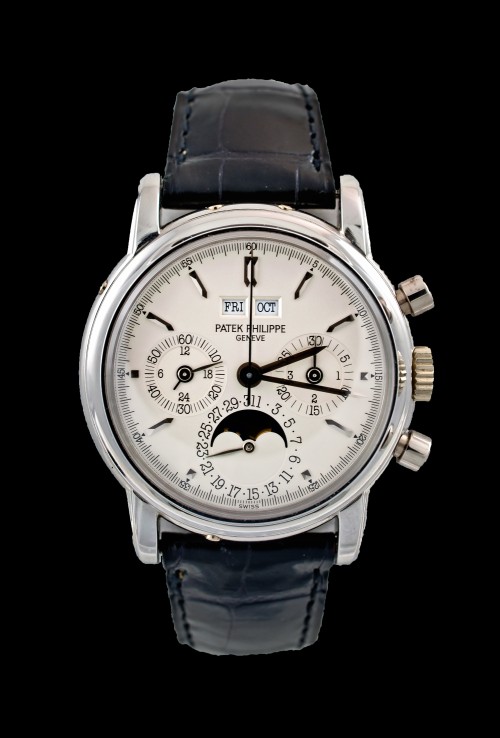
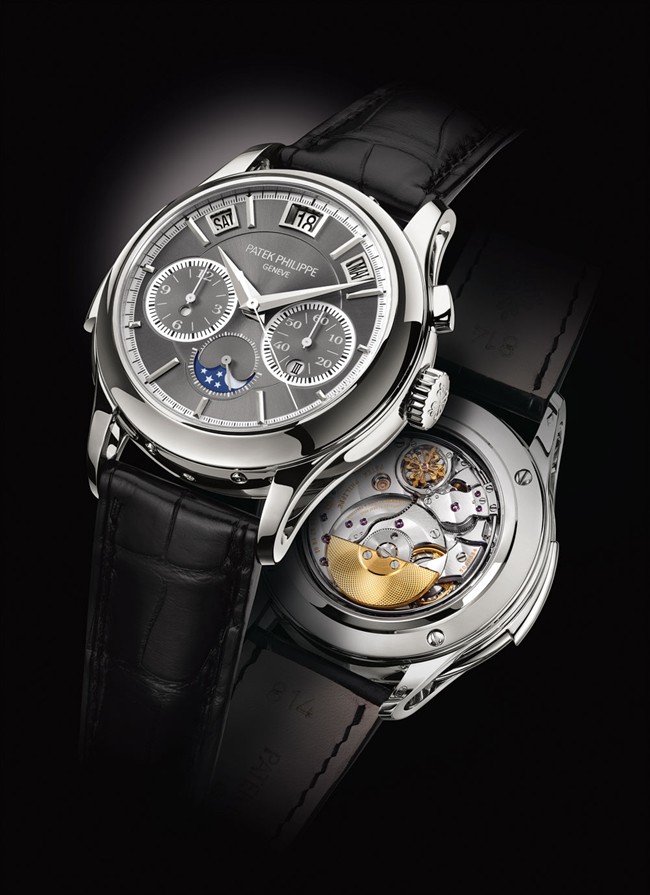
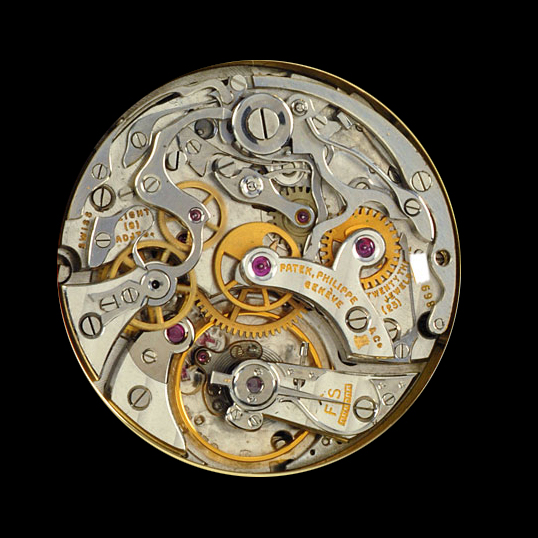
To understand why Patek Philippe is the industry leader requires a separate article which I will write later, but of all the watches that Patek makes, two stand out the most: The perpetual calendar chronograph and the minute repeater. 

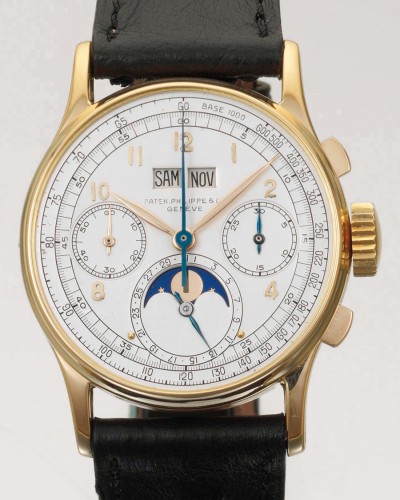
Patek made the first perpetual calendar chronograph with ref. 1518 in 1941 and has been making them continuously since. They have all been column wheel chronographs in the most traditional way with the column wheel covered from direct view. Below is a section taken from a Bonham'sauction describing the history of the Patek QP CH (Quantieme Perpetuel, Chronographe)

Ref 1518 from 1941 until 1952 produced in 281 examples 

(WatchTime Magazine)

Ref 2499 from 1950 until 1985 produced in 349 examples
First model with sapphire crystal


(Antiquorum Auction)

Ref 3970 from 1986 until 2005 produced in approximately 4,000 examples 

(HarrisConor Auction)


Ref 5970 from 2005 until 2010 produced in approximately 2,500 examples 

(minutemachines)

Ref 5270 from 2011

(Patek Philippe)

Honorable mention: Patek ref. 5208 (2011) Perpetual Calendar, Chronograph, Minute repeater. Probably the epitome of the brand sans tourbillon. 

Video of a Thierry Stern interview featuring the watch.


Honorable Mention II: 5204 Perpetual Calendar, split seconds chronograph (there are others in this series like the 5004 but these do not belong in the line of perpetual calendar chronographs discussed in this post).
Saturday, November 3, 2012

Eric Clapton's Platinum Patek Philippe 2499P at Christie's (and what you could buy instead)

A quick photographic history of Patek Philippe Perpetual Calendar Chronographs is here

Christie's auctions have been known to offer some of the rarest and most exceptional watches. This upcoming auction is no exception. While the whole horological world seems to have their eyes set on the platinum Patek Philippe 2499 owned by Eric Clapton (estimate $2,683,456 - $4,293,529), I have my eyes set on a few other very interesting pieces being offered namely the...


Probably the highest resolution photo of the watch in question you'll find anywhere


Eric Clapton wearing the Patek 2499P

Actually during the middle of this post, after researching the 2499 a bit more, the LeCoultre Reverso from 1933 and the Paul Newman Daytona and the Double Red Submariner all seem to matter a lot less than the holy grail that is the 2499P. How could I not geek out about this watch?


At a basic level, the 2499 is a perpetual calendar and a chronograph cased in platinum. At the current market value (1,543 USD/oz) it's worth between 106.34 and 173.91 pounds (or 48 and 79 KG) of pure platinum. A perpetual calendar, while expensive, can be had new for around 10,000 dollars from the respectable Glashutte Original, and a column wheel chronograph from Longines starts at around 3,000 dollars retail. You could even buy this watch in yellow gold for around 300,000 at auction and have a life size platinum statue of yourself made!


Oval Buddha, Platinum plated. Takashi Murakami

So why would anyone on earth buy this instead of a statue that could inspire Shelly into writing Ozymadias? To get the absolute answer you'll probably have to find the anonymous buyer and ask him about it. I think it's fair to say that this watch is so valuable because of the rarity, the beauty, the history, and the craftsmanship - Things you will find in all exemplary watches.

Hodinkee has an excellent article about this watch along with a video

Friday, November 2, 2012

Best Watch Videos #2: Patek Philippe Maintenance Video

Maintenance is obviously important for any mechanical object be it cars, bikes, guns, or watches. While manufacturer service, in my experience, tends to cost 20% more than your local watchmaker, I recommend that any fine timepiece be taken back to Switzerland for their maintenance.

Here is some Patek Philippe Propaganda about their overhaul service with the service prices below. Patek's prices are slightly more expensive than other brands but only by about 25%, except for the fact that they do not include polishing which is standard with most brands.
Service cost is really something that should be strongly considered when buying a watch, a moon phase, although not particularly useful, can add to the cost of service greatly (as I so found out after having my Glashutte serviced).


The short version ~8 min (Available in 720 HD)


The long version with Thierry Stern ~17min (Available in 720 HD)


Monday, October 1, 2012

Comparison: Patek 215 PS versus Vacheron Constantin 1400

While the Calatrava seems to garnish all the attention, one often overlooked but worthy opponent is the Patrimony by Vacheron Constantin, especially the Contemporary in platinum with a platinum dial (pt950). The two are often eerily similar, both using refined JLC ebauches. In this case, the ultra thin automatic JLC Cal. 920 spawns three great movements: The Patek 28-255C, the VC 1120, and AP 2121. The Patek and VC are both similarly finished (despite Patek's recent migration to its own PP seal instead of the Geneva Seal) with a Gyromax free sprung balance.


However, recently things have taken a turn, and since manufacturers like Breitling are even no longer satisfied using ebauches, both watches have started to migrate towards in-house movements. The VC now uses the VC Cal. 1400 and the Patek uses their Cal. 215 PS. Being very much so a movement enthusiast, it's disappointing that although prima facie, the two movements look similar, closer inspection reveals the superiority of the Patek. One reason is perhaps the price difference of USD 7,700 (Patek is USD 39,600 and VC is USD 31,900) which can buy a steel JLC Master Control with money saved. Another is Vacheron's relative inexperience in making movements, while a superb finisher and complication builder, Vacheron acquired HDG in 1998 in order to establish VCVJ (Vacheron Constantin Vallee de Joux) which now does all the component manufacturing for the company. The 1400 was the first movement by the renamed establishment and so the less than perfect mainplate finish could be forgiven.

Philippe Dufour is reported to have complimented on the finish of the 1400, but he seems not to have gotten a look underneath the main bridges. The bridges are indeed beautiful and more elegantly shaped than the Patek with the only visible complaint being the lack of a free sprung balance wheel.


(Photo from VC via The Hour Lounge)

A superb review of the 215 can be found at timezone: http://people.timezone.com/library/horologium/horologium631671451971451015
(Photo from Purists)

and a review by ei8htohms of the 1400 reviews its minor shortcomings on Purists.

The movements are pretty similar, both are 9''' (21.9 mm), 28,800 vph, the Patek is 2.55 mm thick and 18 jeweled and the VC is 2.6 mm and 20 jeweled. Both were Geneva Seal but recently the Patek bears the PP seal. According to watchtime, the Patek is extremely accurate with a max deviation of 3 seconds and averaging a mere +0.2 seconds a day while the VC deviates a max of 6 seconds averaging +1.5 seconds a day.

Let me know in the comments what you think, or does the accuracy not matter since both are dress watches anyways.